prometheus · 20 October 2026 · 6 min read
On the Matters of Grudge and Forgiveness
the art of letting go
In all honesty, when I was a kid I was a really grudge bearing human. You betrayed me during a board game? Grudge. You did not keep your promise? Grudge. You fought with me over something minor? Grudge. You get the point. This kind of continued till I was in college. By then I had learned to forgive people for the sake of social norms, or at least act like I did, but I always kept the spite. I could be talking normally with someone while still remembering that one thing they did months ago.
Eventually, all that spite started catching up to me through my health. Who knew keeping a lurking unresolved feeling inside could harm you, right? I also saw some of my friendships ending because of it, and so forth. I was carrying old anger into new situations and then wondering why everything felt so heavy. It was detrimental, in all honesty.
Fortunately, after my breakup I started watching Vinland Saga. I really loved the kid and teen version of Thorfinn, very relatable in my opinion at that time. The kid had his father killed right in front of him, so who would not be vengeful? The show shows his transformation from a curious child into a vengeful beast who knows and seeks nothing except avenging his father. He follows Askeladd for years and keeps fighting for another chance at giving him what Thorfinn believes would be a proper warrior’s defeat.
Spoiler alert. In the end, Askeladd dies by Canute’s hand before Thorfinn can defeat him. Thorfinn never gets the death for which he trained and waited all those years. As Askeladd is dying, he looks at Thorfinn and asks him: “What are you going to do now? How do you intend to live your life... after I’m gone?”
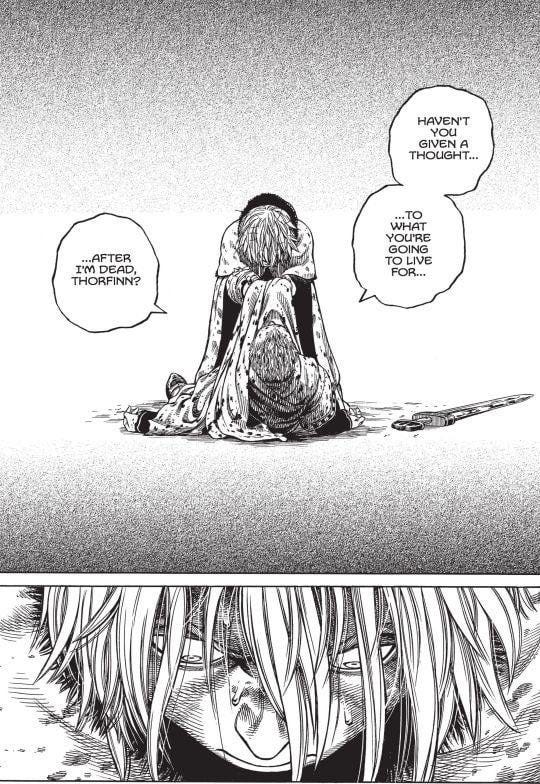
The whole point of his vengeance dies right there. His entire existence is shattered because he never thought about any other life aside from this one goal. He had spent so many years thinking about how Askeladd would die that he never thought about how he himself would live after that. So what I learned was that vengeance is a fool’s game and a grudge does nothing for anyone in the long term. It makes you bitter and slowly sucks everything out of you.
The above paragraph is good in theory, but when it is your turn to get betrayed or let down, you will not reason that easily with the situation. But why is it so hard to forgive? Well, I guess a part of you finds forgiveness itself to be self betrayal. The mind also somehow mixes forgiving with forgetting. It starts feeling like if you forgive them, you also have to act as if nothing happened, and that itself feels like a betrayal. That is not what I mean by forgiveness though.
It is, on the contrary, an active and dynamic decision to let go of the anger whenever it comes back, through whatever ways a person has figured out for themselves. It sure feels really tough, especially when the anger feels justified. But one thing we all forget from time to time is that forgiveness is something we do for ourselves and not for the person we are forgiving.
If you ask me, I believe in second chances now more than ever, but not in third chances. This does not mean that someone accidentally repeating the offence automatically counts as the third fault. I am aware that while redeeming themselves, a person might fall back a bit into their old ways. That is okay as long as the guilt is genuine and the drive for redemption is still there. Genuineness, in terms of forgiveness, is the main aspect, and how you see or measure that genuineness is up to you. There is no machine which can calculate it for you.
Well, what do we even get from forgiveness? And I do not mean just us, but anyone around us, including the person we are forgiving. For starters, forgiveness starts relaxing that distrustful mindset which slowly leaks into everything. It begins to consume you, rot you and make you bitter, due to which it agonises you and the people you love somewhere along the way.
In Ted Lasso Season 3, in the episode called Mom City, Jamie Tartt keeps looking into the stands during a match. Ted asks him why he keeps doing that and what is there. Jamie says he is checking whether his father has shown up, and that bothers him because he hates his father. He also mentions that much of his hunger for football came from spite for his dad, and for some reason that hunger is not working anymore.
Ted suggests that if hating his father is not doing its thing anymore, then maybe Jamie should try something different, which is forgiving him. Jamie scoffs and says he ain’t giving his father that relief. Ted then tells him: “You ain’t giving him anything. When you choose to do that, you’re giving that to yourself.”
It hit me at that moment that forgiveness is first and foremost for yourself, for the baggage you are carrying and for all the anger you have suppressed somewhere inside. Jamie’s father is not even in the stands, but Jamie keeps looking for him. The man does not have to be present to affect him anymore. Jamie thinks forgiveness would free his father from something, while it is Jamie who needs to be freed from it. So I guess sometimes the forgiver and the forgivee are the same person, hehe.
But of course, if they are not the same, the forgivee, if forgiven and genuinely sorry, can turn their life around. Rebecca in Season 1 is a good example of that. She causes massive problems for Ted and tries to sabotage him behind his back out of pure spite and heartbreak over her divorce. She is basically using her own trauma to tear down a guy who has only brought kindness into her life.
When Rebecca finally tells Ted what she has done, he could have easily hated her for it. Instead, he looks past her actions and sees the pain behind them when he tells her: “Divorce is hard. It hits everybody different.” Rebecca was already guilty and came clean on her own. Ted’s forgiveness worked because she wanted to stop being that person. If she did not care about what she had done, the same forgiveness would probably have meant nothing. This is again where genuine guilt comes into the picture.
Now, concluding with an open note for you, in case you have not yet been convinced about forgiving that ex or that childhood friend with whom you fought five years ago. We are all sinners, we all make mistakes, and we are just an ever learning ball of emotions who somehow figured out how to make a rock think by making chips from silica rocks.
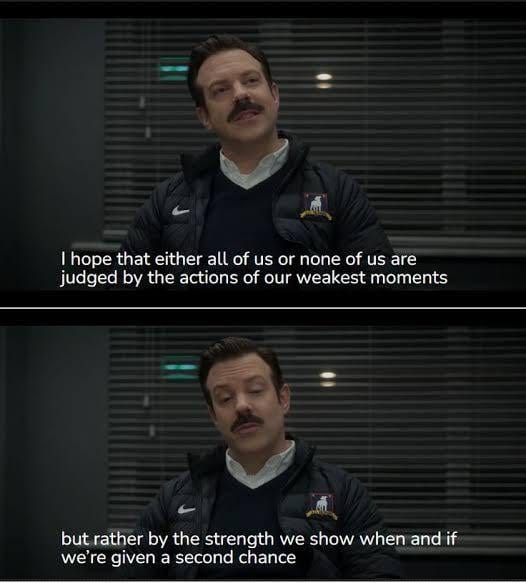
Quoting Ted Lasso again, because yeah, I know, it is my favourite show: “I hope that either all of us, or none of us, are judged by the actions of our weakest moments, but rather by the strength we show when and if we’re ever given a second chance.”